Your browser version is too low, it may lead to sites not normally access!
You can use the site to function properly, use these browsers.
Your browser version is too low, it may lead to sites not normally access!
You can use the site to function properly, use these browsers.

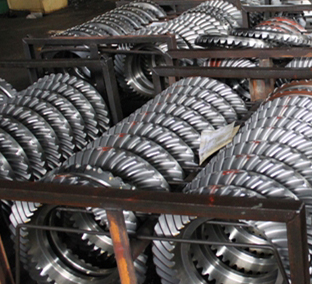
Automotive gears are irreplaceable adaptive components in the vehicle power transmission chain, and their design accuracy and working condition adaptability directly determine the power response and transmission reliability of vehicles in different driving scenarios.
For vehicles with different power types, the design logic of automotive gears is significantly different. Automotive gears for traditional fuel vehicles need to adapt to the torque output characteristics of the engine in a fixed speed range, while similar transmission components for hybrid vehicles need to take into account the dual power source coupling requirements of the engine and drive motor, and realize smooth switching between low-speed electric drive and high-speed fuel drive through gear ratio design, avoiding transmission jitter during dual power switching.
With the continuous upgrading of motor vehicle emission and energy consumption standards, the processing accuracy requirements for such transmission components are also increasing. Improving the meshing state through precision hobbing and tooth surface topology optimization technology can effectively reduce energy loss during transmission, and help vehicles meet the compliance requirements of energy consumption and emission. In daily use, the operating status of automotive gears can be predicted through subtle changes during vehicle driving. For example, slight jitter during steering and low-frequency vibration during constant speed driving may be early signals of the deviation of the meshing clearance of automotive gears. Timely inspection can effectively avoid the expansion of transmission faults.
Choosing products that fully match the parameters of the original vehicle power system, combined with standardized working condition adaptation inspection, can effectively extend the service life of the transmission system and provide reliable support for the long-term stable driving of the vehicle.