Your browser version is too low, it may lead to sites not normally access!
You can use the site to function properly, use these browsers.
Your browser version is too low, it may lead to sites not normally access!
You can use the site to function properly, use these browsers.

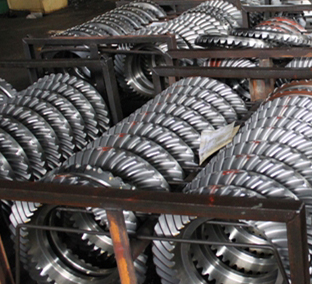
The processing and assembly precision of gears are key indicators that determine the operating state of construction machinery. The precision level affects the overall machine performance and service cycle from multiple dimensions including power transmission, operation loss and component wear.
If the precision of tooth profile and tooth direction fails to meet standards, the contact area will be uneven during gear meshing, and force will concentrate on local tooth edges. When the equipment bears heavier loads during operation, local high pressure will quickly cause metal fatigue, leading to tooth surface pitting and spalling in a short time, and even tooth fracture and shutdown in severe cases. Uneven meshing will also amplify transmission vibration, which transfers to frames and hydraulic assemblies, accelerating secondary faults such as loose bolts and cracked oil seals, and greatly increasing the overall equipment failure rate.
High-precision gears with well-controlled dimensions and coaxiality feature uniform and moderate meshing clearance and lower power transmission loss. With the same engine power output, high-precision gears can deliver more power to the working end, delivering stronger force for excavation, hoisting, bulldozing and other operations. In contrast, large precision deviations convert a great deal of kinetic energy into frictional heat, weakening operating power while rapidly raising gearbox oil temperature. Lubricating oil tends to deteriorate and fail in advance, losing its protective and lubricating functions.
Assembly precision such as coaxiality and end face runout cannot be overlooked either. Deviations make gears run under eccentric load for a long time, with one-side tooth surfaces enduring overloaded friction continuously and wearing at a multiplied speed. High-precision matched gears run with slight vibration, delivering smooth jitter-free performance during travel and operation, lowering operator fatigue during long shifts. They also reduce leakage and malfunction of hydraulic pipelines and precision instruments caused by sustained vibration.
From long-term working condition comparison, construction machinery gears with qualified precision experience gentle fatigue wear and enjoy a noticeably extended overhaul cycle. Rough-precision gears often show obvious damage within just a few months. Frequent part replacement and downtime maintenance greatly raise engineering operation costs. Verifying gear precision parameters during procurement and assembly, together with standardized installation and adjustment, is an economical and practical way to extend equipment life and stabilize operating performance.